
100-200 pcs per style
A run size built for learning, not for filling a warehouse.
Our typical starting MOQ is planned around a launch that still needs to prove demand. Small enough to protect cash flow, large enough to read a real market signal.
Your low-MOQ bag development & manufacturing partner.
Low-MOQ bag development only works when quantity, sample timing, and sourcing are planned together from the start.
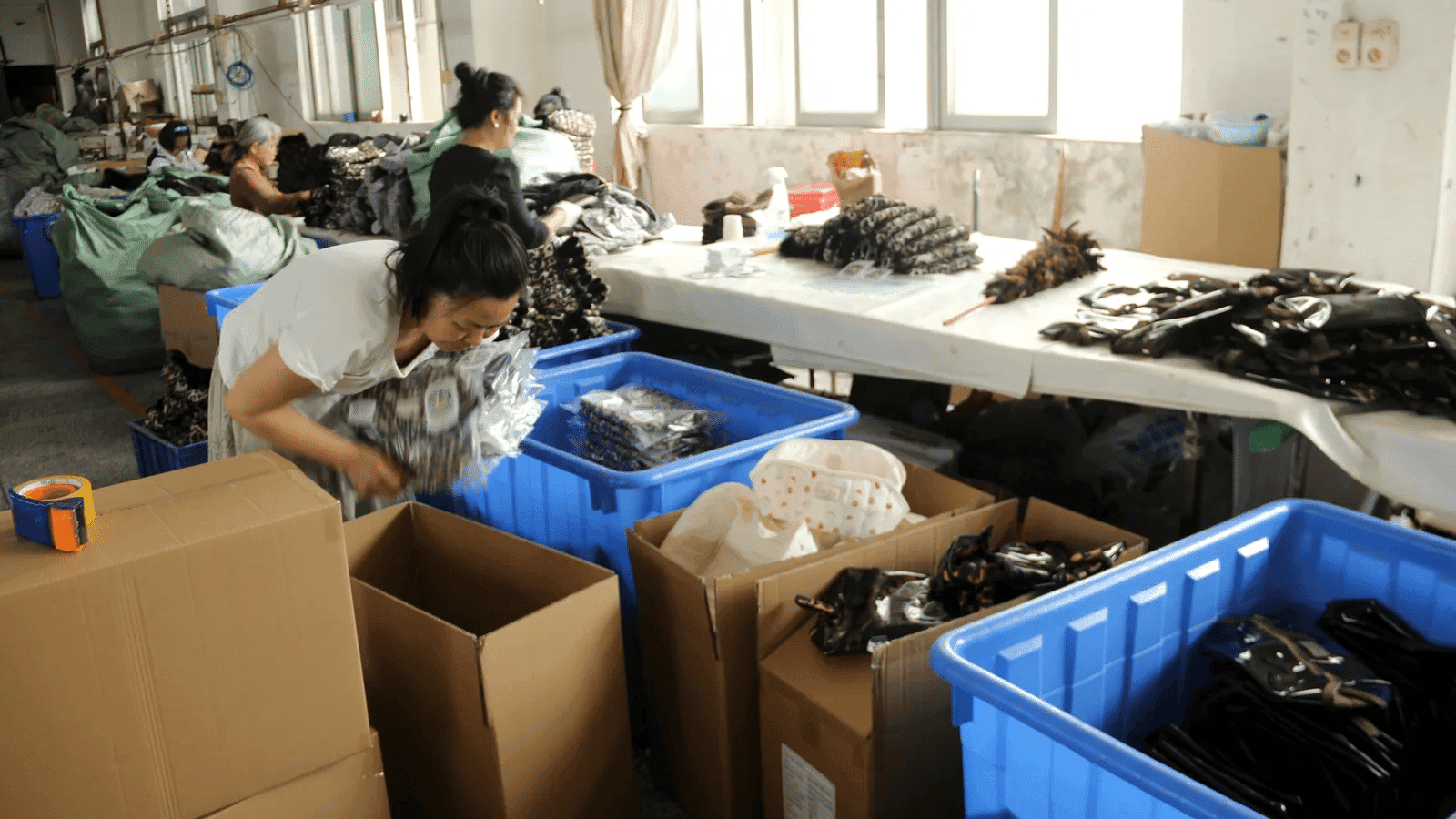
Low MOQ only works when the structure, material plan, and sourcing path are built around a smaller first run. We help brands test demand, protect cash flow, and keep repeat orders viable instead of forcing traditional minimums that create unnecessary inventory risk.
Minimum per style
100-200 pcs
Typical starting range when the structure and materials stay commercially realistic.
Sample ready
7-10 days
For simpler directions with confirmed materials and limited revision scope.
Bulk production
35-45 days
After final sample approval and material confirmation.
Most factories require 300 to 1,000 pieces because it is rarely one minimum. They stack three - one for the style, one for the material, one for the production line itself. Each threshold is designed for efficiency at scale. Together, they push smaller runs out of reach.
Per style
Development setup, cutting plans, and line preparation stay almost the same whether the run is 100 pieces or 1,000. Traditional factories price that setup across a large batch - commonly 500 to 1,000 units - because the math only works that way.
Per material
Fabric mills quote by roll. Hardware vendors quote by batch. Dye lots are optimized for volume. Most MOQ pressure starts upstream - before sewing even begins - because the brand ends up absorbing a purchasing minimum much larger than the first launch needs.
Per production run
Sampling, BOM confirmation, QC setup, and shipment coordination do not scale down with quantity. Without visible reorder volume, many factories decline small runs rather than absorb the same overhead for a smaller outcome.
The point is not just to accept a smaller quantity. The point is to keep the project commercially sound now and easier to repeat later.
Accepting a smaller quantity is the easy part. The harder part is keeping the project commercially sound - for us and for you - so the first run works cleanly and the second run is even easier to place.
A run size built for learning, not for filling a warehouse.
Our typical starting MOQ is planned around a launch that still needs to prove demand. Small enough to protect cash flow, large enough to read a real market signal.
Backpack, tote, and pouch planned as one program.
When styles share construction logic or core materials, we consolidate pattern work, cutting, and procurement across them - so each style behaves like part of a range rather than a separate factory project.
Materials chosen so the second order does not start from scratch.
We guide you toward fabrics, linings, webbings, and hardware that can be reordered cleanly later - locking in sources at the sampling stage so reorders avoid color drift and avoidable substitutions.
Prototype, pilot batch, then scale - with risk calls made upfront.
If a material or construction choice is likely to raise the minimum or stretch the timeline, we flag it before you commit. When the project benefits from it, we break the work into prototype, pilot run, and reorder phases.
Behind most low-MOQ inquiries is not hesitation. It is a brand trying to manage uncertainty, protect cash flow, and avoid making one expensive wrong bet too early.
You want to test a launch without carrying too much stock.
The pressure is not only about MOQ. It is about inventory risk, uncertain demand, and making sure the first run teaches you something instead of trapping cash in storage.
You need two or three styles to arrive together, not one by one.
A starter range often needs a backpack, tote, and pouch to feel complete. We plan the overlaps so the launch looks coherent without multiplying minimums across every SKU.
You have a clear direction, but the first budget still needs protecting.
Early-stage brands rarely need more product. They need a smarter first batch, with a quantity and material plan that leaves room to refine the next order instead of forcing one big gamble.
You would rather replenish in smaller deliveries than overbuy once.
If your business works better through rolling restocks, we keep the files, sourcing notes, and approved references organized so repeat orders stay consistent and faster to restart.
Sampling cost does not change because your MOQ is small - but it matters more, because it is a larger share of the first batch budget. Plan it with eyes open.
Simple structures ship samples in 7 to 10 working days. Complex convertible or modular builds can take 14 to 21 days or more.
Sampling runs from $50 per unit for simple constructions up to $250+ for complex multi-function builds. Non-standard materials and mold fees are quoted separately and only confirmed with your approval.
For a 100-200 unit first run, sampling and tooling typically represents 8-15% of total first-batch spend. Plan for it from day one rather than treating it as an add-on.
See the full Simple / Moderate / Complex breakdown and inclusions list on our OEM / ODM / ODS page.
Every project moves through the same arc - we just scale the decisions to match a smaller first batch. Here is the shape of it; the full nine-stage process is documented on our OEM / ODM / ODS page.
01
Brief, feasibility, and material direction.
We review your reference materials, confirm structural feasibility against your target MOQ, and lock the material and hardware direction before pattern work begins. Typically 3 to 5 working days.
02
First sample, review, and golden-sample approval.
Paper pattern, first prototype, internal QC, sample delivery, one included round of minor revisions, and sign-off on the golden sample that becomes the production benchmark. Typically 2 to 4 weeks end to end.
03
Bulk run against the approved sample.
Mass production begins after final material confirmation. Typical lead time is 35 to 45 calendar days. Bulk follows the golden sample strictly — no substitutions without your approval.
If you have the idea and the direction - even if the quantity is small - we will help you bring the first batch to life. Every delivery is the starting point for a better next one.
These are the questions that come up most often when a brand is trying to keep the first launch disciplined, testable, and commercially realistic.
Whether you already have drawings or only a rough concept, we can help you decide what makes sense for the first sample and the first production batch.
Email: info@livenbags.com
Response: usually within 24 hours
Most products start at 100-200 pieces per style, depending on structure and materials. If multiple styles share the same structure or material logic, we can sometimes consolidate them toward a combined MOQ and lower the per-style threshold.
Sometimes, yes. It depends on whether the styles share enough structure, fabric, lining, and hardware to be planned as one program. We review that early and tell you which combinations keep the MOQ workable and which ones still trigger separate material minimums.
We usually provide a bulk price estimate during sampling so you can judge the project before committing. If bulk follows within a reasonable period and the approved materials stay stable, the pricing logic normally stays the same or only shifts slightly based on sourcing changes.
Usually yes, and that is the point. Once the first sample is approved and the sourcing is locked in, reorders avoid the heaviest setup costs and the longest lead times. We keep materials, patterns, and approved references on file so a second or third batch can be placed in smaller increments without rebuilding the project.