
LIVEN BAGS

Home / Services / Craftsmanship

Craftsmanship & Construction

We recommend construction techniques based on function, material behavior, and product positioning - not based on what the factory happens to run most often. The right technique protects performance, controls cost, and makes the bag feel finished in hand.

Get Construction Advice
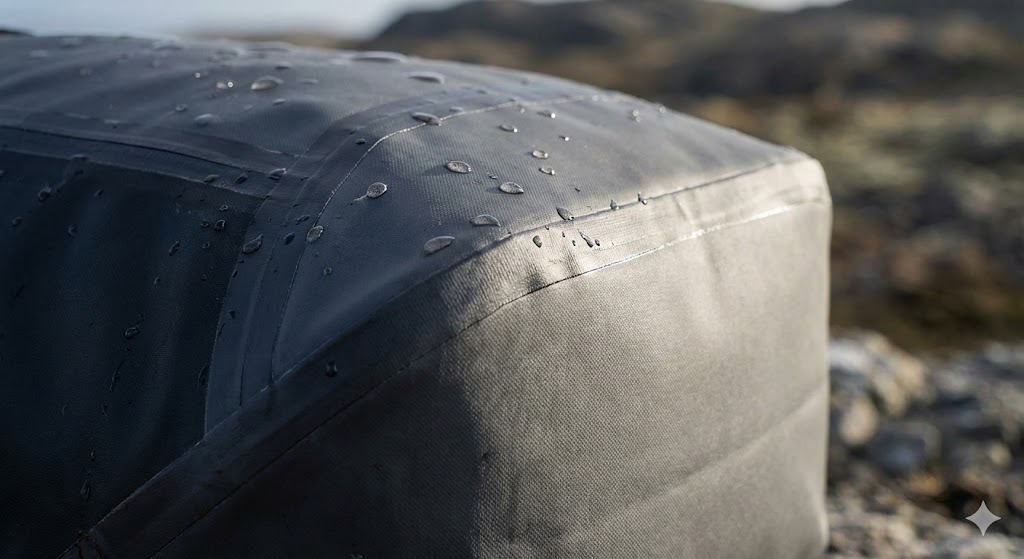
Water droplets on a sealed bag construction reference
Welded
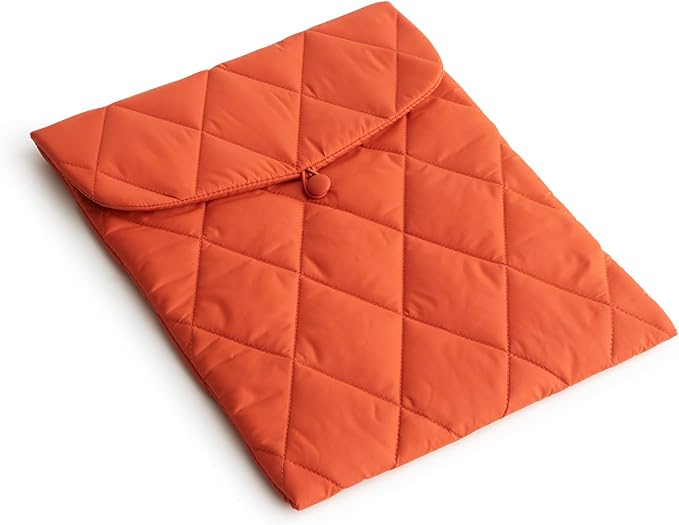
Orange quilted padded pouch
Quilted
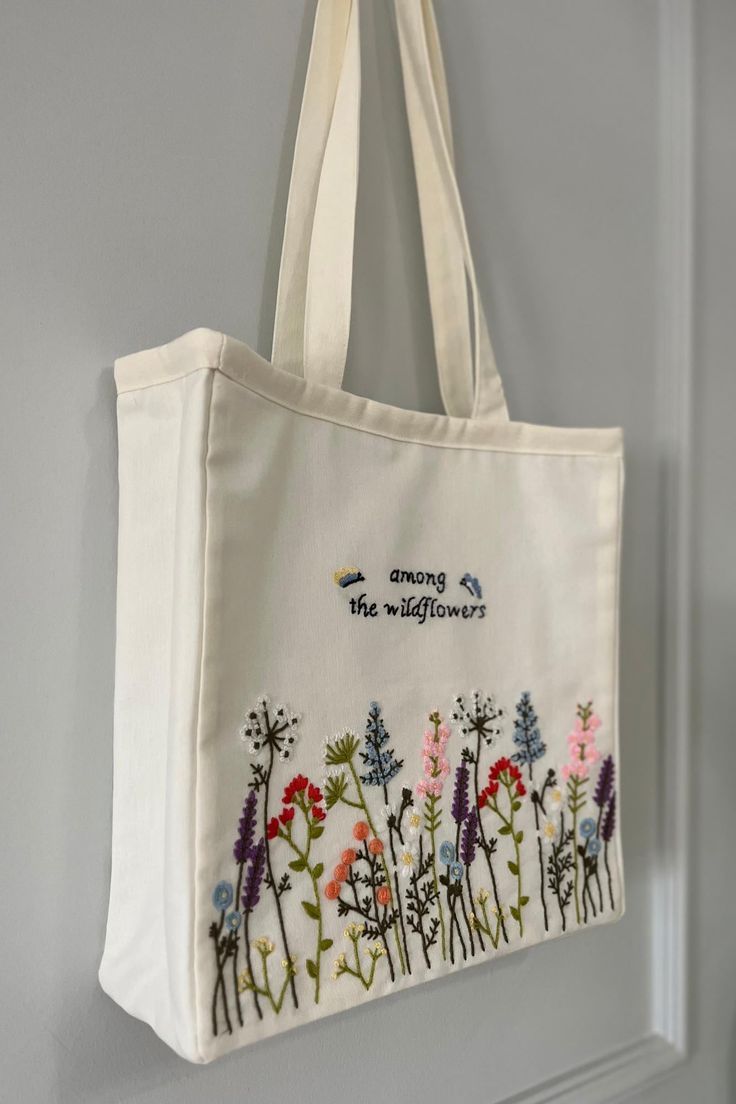
Canvas tote with a floral embroidered panel
Stitched

How We Help You Choose a Construction Method

Most construction problems are caused by choosing a technique too late - after the design is locked and the material is confirmed. We recommend the construction path before sampling starts, so the technique supports the product instead of working against it.

Not sure which construction approach fits your product? Share the bag type and use case.

Get Construction Advice
  1. 01

    Start from the product's real use case

    Tell us what the bag needs to survive: daily commute abrasion, outdoor weather exposure, luggage handling, child use, device protection, or fashion-oriented hand feel. The construction method follows the use case, not the other way around.

  2. 02

    Match technique to material and structure

    A welded seam only works on coated fabrics. Quilting needs a specific padding stack. Embroidery adds thread tension to thin shells. We identify which construction methods are compatible with your chosen material before the sample is cut.

  3. 03

    Balance durability, appearance, and cost

    Some techniques - bonded seams, foam lamination, complex quilting - add labor or tooling cost. We compare the functional gain against the price impact and recommend the simplest construction that achieves the performance target.

  4. 04

    Validate construction during sampling

    The first sample is not just for shape and size. We check seam integrity, edge cleanness, padding behavior, and structural hold before approving the golden sample for production.

This is one step of a larger process. See the full development journey on our OEM / ODM / ODS page →

Craft Technique Library

Browse our construction capabilities across five technique families. Each entry explains what the method does, where it works best, which materials it requires, and what to consider for sampling and cost. Contact us for a recommendation matched to your product brief.

High-Frequency & Ultrasonic Welding / High-Frequency (HF) Welding

High-Frequency (HF) Welding

Uses electromagnetic energy to fuse PVC, TPU, or specially coated fabrics at the molecular level. Creates a permanent, airtight, waterproof bond with no stitching. The weld line is flush with the surface and can be almost invisible.
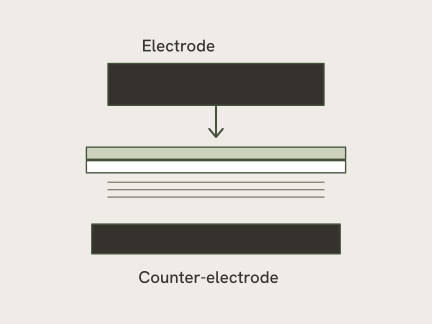
High-frequency welding process illustration with an electrode and counter-electrode
Best for
Waterproof duffels, dry bags, technical pouches, and coated-fabric products where stitch holes would compromise water resistance.
Watch for
Only works on polar thermoplastic materials such as PVC, TPU, and certain coated fabrics. Each seam profile typically needs its own die.

Waterproof · Seamless

Welded construction creates sealed, stitchless joins for waterproof and clean-surface products. The technique fuses compatible materials together using electromagnetic or ultrasonic energy, eliminating needle holes and thread degradation.
Get Construction Advice

Project references

Use these reference routes to compare how the same library decisions translate into complete bag programs.

Waterproof Travel Duffel

HF-welded main seams + heat-pressed panels + bonded zipper tape. Sealed construction for weather-resistant travel products.

Review route

Quilted Fashion Tote

Channel-quilted outer panels + foam padding + bound internal seams. Soft structure for fashion-forward handbags and accessories.

Review route

Heritage Canvas Backpack

Embroidered logo details + bartack-reinforced stress points + woven carry strap. Craft-visible construction for lifestyle and heritage positioning.

Review route

Construction Packages From Real Projects

These are construction systems we have produced for real client projects. Each package shows how the primary construction method, reinforcement choices, edge finishing, and quality checkpoints work together. Use them as a starting point, or ask us to adapt one to your product.

Choose a construction package

Water droplets on a sealed bag construction reference
Primary seams

Waterproof Travel Duffel

A sealed construction system where every seam is either welded or taped. The bag can handle rain, wet surfaces, and luggage handling without water entry.

HF Welding · Primary seams

Main body seams fused with high-frequency die for a waterproof bond.

Bonded Seam Tape · Secondary seams

Stitched structural joins sealed with PU adhesive tape overlay.

Heat-Pressed Lamination · Panel structure

EVA foam laminated to the TPU-coated shell for body rigidity.

Welded Edge Fold · Edge finish

Raw edges folded and welded to eliminate exposed cut lines.

Bartack + Welded Reinforcement · Stress points

Strap bases use both bartack stitching and welded overlays.

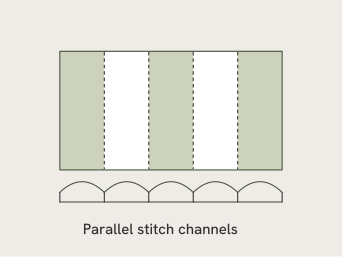
Parallel stitch channels — construction illustration
Channel Quilting — construction illustration

Quilted Fashion Tote

A padded construction system where the quilting pattern defines the product's visual language and provides soft device protection.

Channel Quilting · Surface construction

25mm-spaced parallel channels over 5mm PE foam.

Heat-Pressed Bond · Lining attachment

Lining bonded to the quilted panel to reduce internal shifting.

Bartack Reinforcement · Handle base

Dense stitch block at each handle root for load distribution.

Bound Seam · Edge finish

Folded binding tape covers raw panel joins.

Cold-Pressed Shaping · Bottom panel

Rigid bottom panel cold-pressed for flat-stand stability.

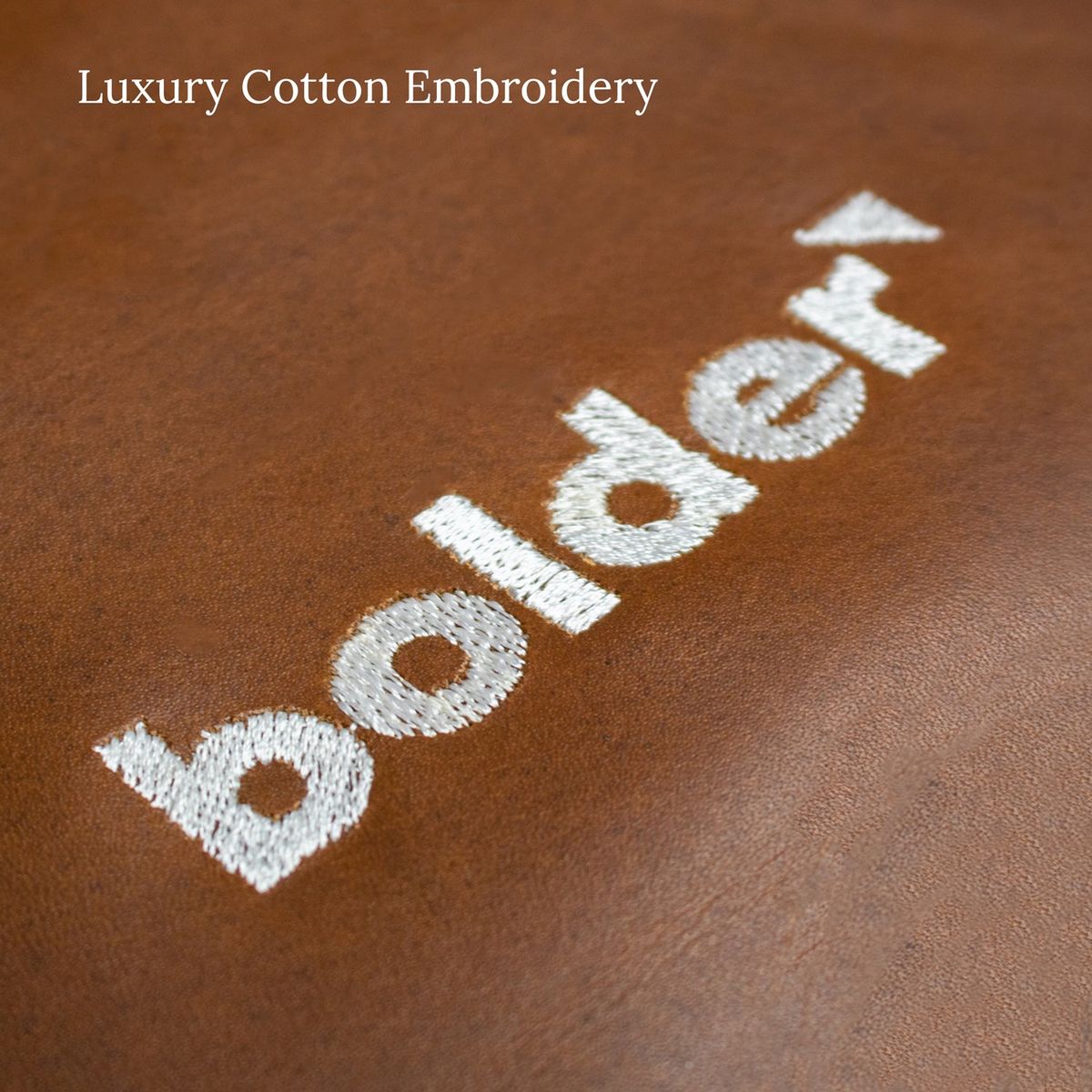
Close-up of white lettering embroidered on brown fabric
Flat Embroidery

Heritage Canvas Backpack

A craft-visible construction system where stitching, lacing, and thread details are intentionally left visible as honest construction signals.

Flat Embroidery · Logo detail

Brand logo stitched directly on the front canvas panel.

Bartack + Lacing · Strap attachment

Visible bartack blocks with decorative cord lacing at strap roots.

Drawstring + Flap · Closure

Cotton drawstring cinch with magnetic flap snap overlay.

Cold-Pressed Base · Panel shape

Bottom panel cold-pressed for stand-up shape retention.

Raw-Edge Fold Stitch · Edge treatment

Folded raw edge with visible topstitch 3mm from the fold line.

Construction Quality Checkpoints

Construction technique alone does not guarantee product quality. We test and inspect at defined checkpoints during sampling and production so the finished bag performs as expected - not just looks correct in a photo.

If your product needs to meet specific performance standards - such as load testing for straps, abrasion cycles for surfaces, or water-resistance ratings for seams - we can coordinate third-party testing through SGS, Intertek, or BV as part of the production workflow.

SEAM

Seam Integrity Check

All stitched and welded seams are inspected for consistency, thread tension, weld penetration, and alignment before the sample is shipped.

EDGE

Edge Finish Inspection

Binding tape coverage, fold alignment, raw-edge containment, and topstitch spacing are checked against the approved specification.

STRESS

Stress Point Validation

Bartack density, strap pull resistance, handle root reinforcement, and zipper endpoint anchoring are tested under simulated load.

SHAPE

Shape Retention Test

After filling and standing for 24 hours, the bag's form, base flatness, and panel behavior are compared to the approved reference sample.

SURFACE

Surface Craft Review

Quilting pattern registration, embroidery stitch quality, pressing uniformity, and visible craft details are inspected for consistency across units.

GOLDEN

Approved Sample Benchmark

The approved final sample becomes the permanent production reference. Every bulk unit is visually and structurally compared against this standard.

Common Questions About Craftsmanship & Construction

These are the questions that usually need to be answered before sampling a bag with specific construction requirements.

Does waterproof construction always require welding?

No. Some products achieve adequate water resistance through coated fabrics, sealed zipper tape, storm flaps, and bonded seam tape without full HF-welded construction. We assess the water-resistance target and recommend the most cost-effective approach.

Can quilting and embroidery be done on the same bag?

Yes. Many lifestyle and fashion products combine quilted panels with embroidered logos or decorative stitching. The key is planning the construction sequence so neither technique interferes with the other during assembly.

Do advanced construction techniques increase sampling cost and time?

Usually yes. HF welding requires die preparation, quilting adds sewing time, and foam lamination needs material alignment steps. We quote the construction complexity up front so there are no surprises. Simpler techniques like bartack and binding have minimal cost impact.

Can you simplify an over-engineered design without losing quality?

Yes. We regularly recommend construction simplifications that preserve the product’s functional performance and brand feel while reducing labor time, failure risk, or material waste. Less is often more in bag construction.

How do I know if my product needs pressed or laminated panels?

If the bag needs to hold its shape without internal framing - or if a panel needs even padding without visible quilting - pressing or lamination is usually the answer. We assess this during the material and structure review before sampling.

What quality checks happen during production, not just sampling?

We run the same construction checks during bulk production: seam integrity, stress-point validation, edge finish, and shape retention. A dedicated QC checklist based on the golden sample is used for every production run.

Ready to define the right construction for your bag?

Share the bag type, target use case, and any structural requirements. We will recommend the construction method, flag any material compatibility issues, and align the build approach before sampling starts.

Get Construction AdviceOr browse the craft technique library to explore on your own first.